Spooked!
Spooky, lighthearted visual novel created as a teaching project for a university course. Meet a quirky cast of Halloween-themed characters, make choices that shape your adventure, and discover multiple endings in this small, interactive introduction to visual novel storytelling.
visual-novel web renpy
Created:
A little spooky, a little silly, and full of choices!

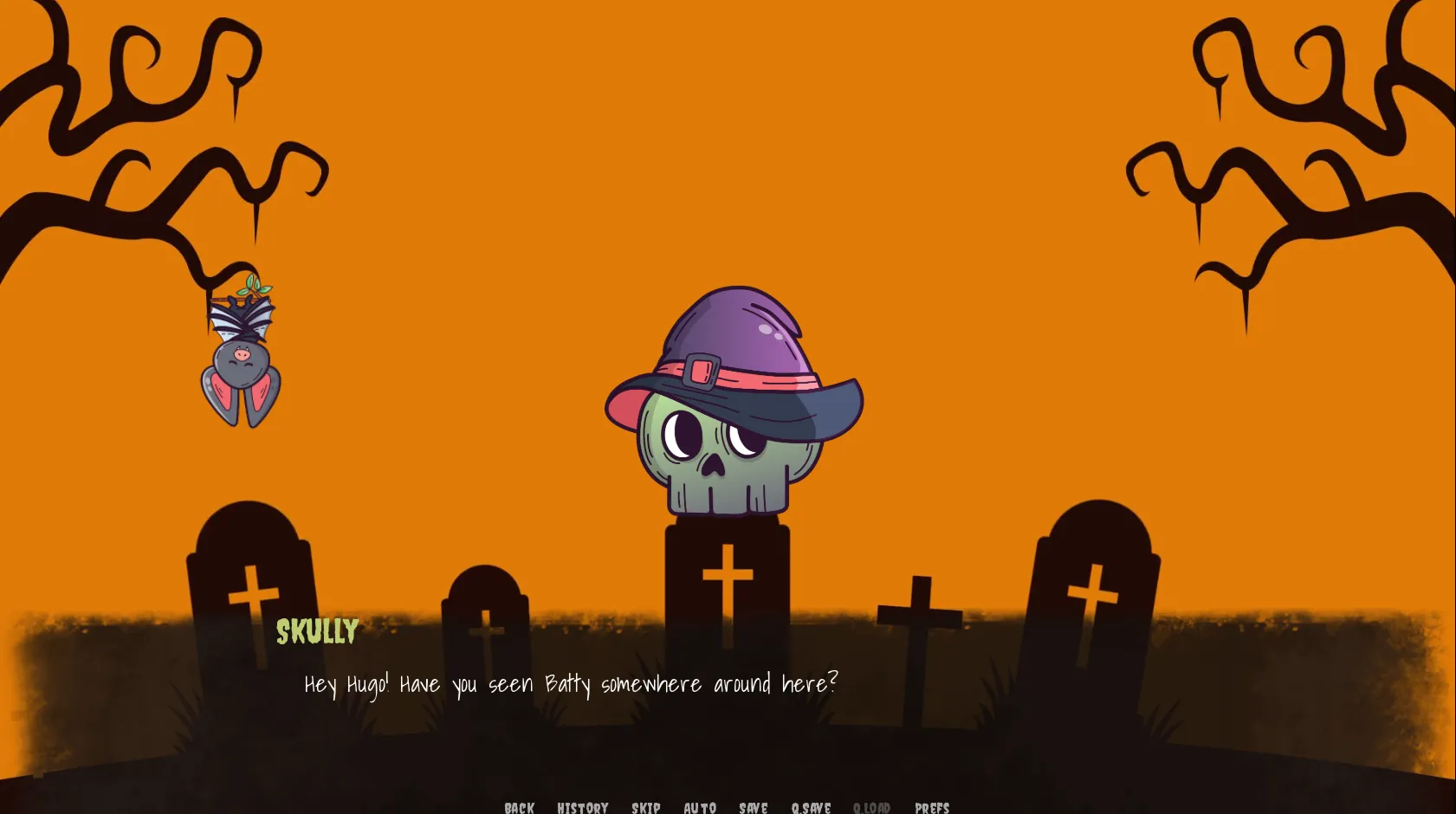
Spooked! is a short, interactive visual novel that combines a playful supernatural setting with branching dialogue and multiple endings. Players join Skully, a friendly skeleton, on a quest to find Batty, a sleepy bat, and decide how their little adventure unfolds. With character interactions, atmospheric backgrounds, animated sprites, and a spooky audiovisual presentation, the game brings its quirky cast to life.
Different choices lead to different outcomes, encouraging players to explore the story and discover its endings. Developed as a demo project for the university course 2D Game Animation and Interactive Storytelling, Spooked! also serves as a practical introduction to the fundamentals of visual novel development using Ren’Py.
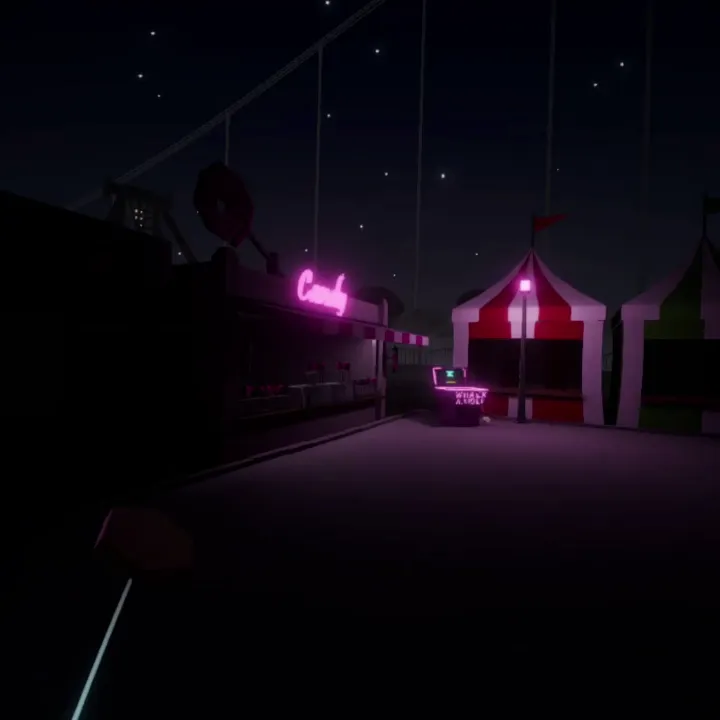
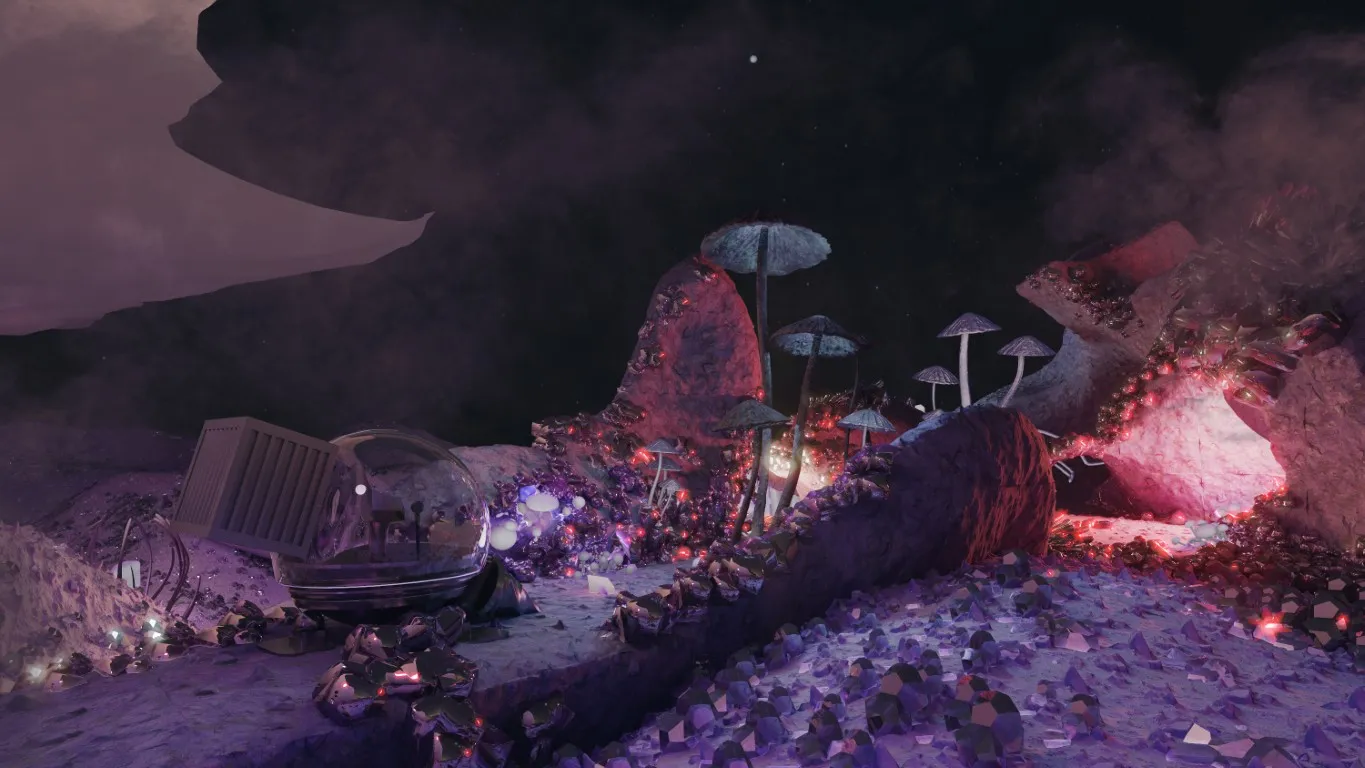
Screenshots
Development
Spooked! was developed using Ren’Py and its Python-based scripting language, demonstrating core concepts of visual novel development through a compact, playable example.
The project showcases several key features:
- Branching narrative: Labels, conditional logic, menus, and jumps structure the story and connect player choices to different narrative outcomes.
- Character and state management: Character definitions, dialogue interpolation, and variables track the player’s chosen name and story progress, influencing subsequent scenes.
- 2D animation and transforms: Animated WebM character sprites, layered character states, custom positioning transforms, movement transitions, and a procedural shaking animation bring the characters to life.
- Video and scene transitions: A prerendered introductory cutscene, animated backgrounds, and transitions between scenes establish the game’s atmosphere and pacing.
- Audio implementation: Background music, ambient sound, sound effects, volume control, fade transitions, and a low-pass audio filter reinforce the mood of individual scenes and endings.
- Custom presentation: A custom display font, reusable text styling, and Ren’Py’s image and screen presentation features support the game’s visual identity.
- Multiple endings: Separate ending labels demonstrate how narrative branches can lead to distinct outcomes and how audiovisual elements can be adapted to each conclusion.
The project was designed as both a standalone narrative experience and an educational resource, illustrating how Ren’Py combines scripting, visual assets, animation, audio, and interactive storytelling within an accessible development workflow.